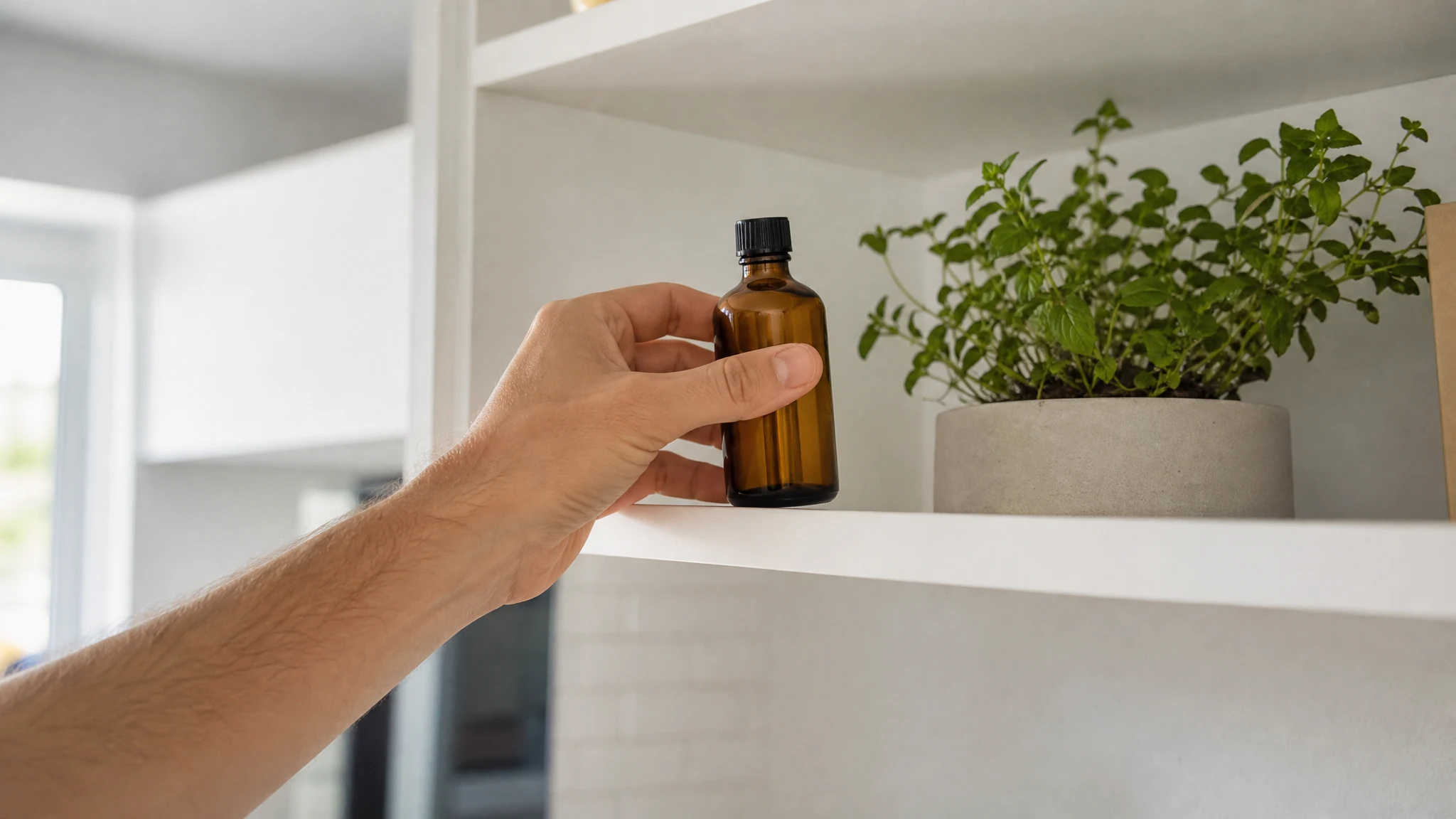
Lemon Verbena Oil and Children: Poison Data and Storage
The best-documented danger to a child from an essential oil is not the smell. It is the bottle: children swallow oil, and the data on that come from poison centres. We do not say lemon verbena oil is safe for any child, and nothing in its sources would let us. Our own copy says to keep it away from children and pets, and the useful part of this article is how.
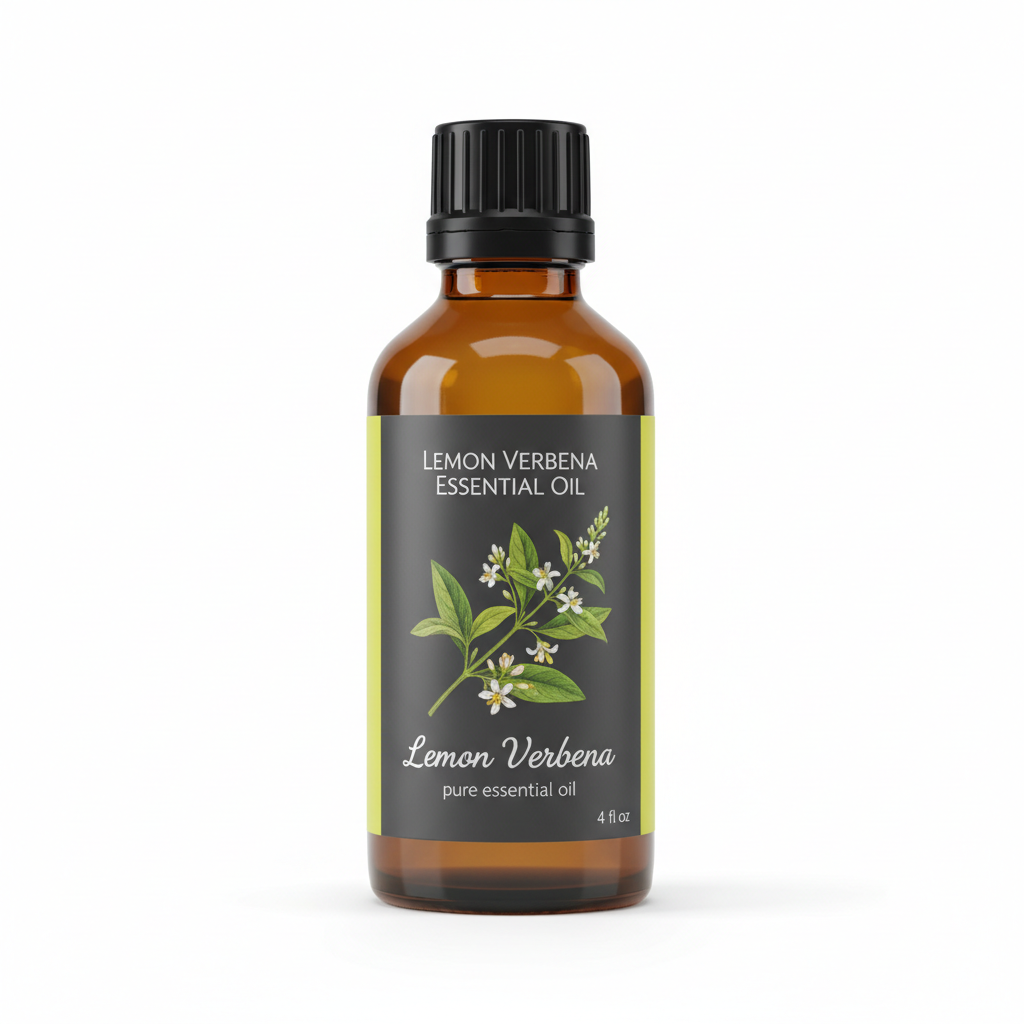
Lemon Verbena Essential Oil
Our own Lemon Verbena Essential Oil, in sizes from 0.5 oz to bulk.
From $12.99
Shop Now →What the poison-centre data count
The most detailed recent figures come from Australia. Lee, Harnett and Cairns (Medical Journal of Australia, 2020;212(5), published online December 2019) reviewed calls to the New South Wales Poisons Information Centre from July 2014 to June 2018. It was a retrospective count of calls about essential oils in general, not about lemon verbena:
- 4,412 essential oil exposures; calls rose from 1,011 in 2014-15 to 1,177 in 2017-18.
- 2,790 (63%) involved a person under 15.
- 1,387 callers (31%) had symptoms of poisoning when they called.
- 3,530 (80%) were accidental, and 580 (13%) were mix-ups, mostly an essential oil mistaken for a liquid medicine, with cough liquids the commonest mix-up.
The authors state that "as little as 5 mL" can cause severe toxicity in children. That is their statement about essential oils collectively, drawn from their reading of the literature; it is not a threshold for lemon verbena oil, and none has been established for it in the sources read here. They also note that closures are only required for containers over 15 mL under the rules they describe (Australian), and call that inadequate.
The US-side guidance reads the same way. The Connecticut Poison Control Center tip sheet (undated) says children under 6 are most at risk, especially ages 1 to 3, that "adults tend to make more severe mistakes", and that essential oil bottles "often do not have child-resistant safety caps." Its advice is to keep them up, locked away and out of sight, label with name, date and strength, avoid undiluted oil on skin, and avoid ingesting oils.
What 5 mL of our oil looks like
This is arithmetic from our COA batch, not a toxicity statement. The COA gives a relative density of 0.869, so 1 ml weighs about 0.869 g; at about 20 drops per ml (droppers vary), one drop is about 43 mg.
| Bottle | Volume | Weight of oil | Multiples of the 5 mL figure |
|---|---|---|---|
| 0.5 oz | 14.79 ml | about 12.9 g | about 3 |
| 1 oz | 29.57 ml | about 25.7 g | about 6 |
| 5 ml (the authors' figure) | 5 ml | about 4.3 g (about 100 drops) | 1 |
Even our smallest size holds about three times the amount the Australian authors name. For a toddler, the question is therefore not whether a bottle contains enough, but whether the child can reach it. The bulk sizes (5 lb up to 400 lb) are a storage and handling matter for a workshop, not a household one; keep those where only trained adults have access.
Our bottle is not sold as child-resistant
We make no claim that our bottles have child-resistant closures, and our product copy does not describe one. Assume the cap is an ordinary closure. The US rule that defines special packaging for hazardous household products, 16 CFR 1700.14 (read 27 October 2026), requires it for, among others, products with 10% or more hydrocarbons by weight and a viscosity under 100 SUS at 100 F, and for liquid preparations with more than 5% methyl salicylate. The text does not mention essential oils by name, and we hold no data on where a given lemon verbena oil would fall against those tests. Do not assume a closure on any essential oil bottle is child-resistant unless the bottle says so.
Storage, in order of how much each step buys you
- Locked or high. The tip sheet says "up and locked away"; a high shelf a toddler can climb to is not the same thing. Put the bottle and the dropper accessories in a box with a latch, out of sight.
- Do not decant to unlabelled containers. Label with name, date and strength, as the tip sheet says, and keep diluted blends separate from neat oil.
- Never beside medicines. The mix-up group in the Australian data (13%) is oil mistaken for a liquid medicine, usually a cough liquid. Do not store oil in the medicine cabinet or in the same bag.
- Close the cap after every use, even for a minute. Our storage copy also asks for tightly capped, cool and dark storage, which suits the oil and the child rule at once; see the storage guide.
- Decant working amounts if you are using the oil often, and put the larger bottle away. A small bottle left on a bench is the likelier accident.
Skin and air are separate questions
On skin, our guidance for adults is 0.5% to 2% in a carrier with a patch test first, and it says plainly to keep the oil away from children. We have no child-specific dilution and cannot supply one; no authority we have read gives one for this oil. That is a question for a paediatrician or pharmacist, who can weigh the child's age and skin. Our site also notes that verbena can be mildly photosensitising; the skin basics article covers it.
In the air, the data on children are thin. The European Medicines Agency's monograph on lemon verbena leaf tea says use in children "has not been established due to lack of adequate data" (EMA/HMPC/376770/2019, 13 January 2021), and the same document says safety during pregnancy and lactation has not been established. That is about the leaf in a cup, not the oil in a room, and it is cited only to show that even the better-studied material has no paediatric data behind it. For diffusing, keep children out of the room while the unit runs and ventilate afterwards, as set out in the diffusing guide. Fragrance sensitivity is also common in the general population: in Steinemann's 2016 survey of 1,136 US adults, 20.4% reported health problems from air fresheners or deodorizers. That is self-reported adult data, not a children's study.
If a child gets into the bottle
Do not wait for symptoms. In the US call poison control on 1-800-222-1222 (the Connecticut tip sheet lists it for essential oil poisonings); elsewhere use your local emergency number or poison centre. Have the bottle, the label and the botanical name, Aloysia citrodora, to hand. Contact with the eyes or skin also warrants a call, since the tip sheet's own examples include a child spraying an oil into the eye. We cannot give first aid advice for a specific exposure, and it is not something to improvise from a website.
For anything about a particular child, such as whether a scent is appropriate around a newborn, the people to ask are the child's paediatrician or a pharmacist. This article gives the data and the arithmetic; it cannot give clearance.
Lemon Verbena Essential Oil
Lemon Verbena Essential Oil from our own shop, in sizes from 0.5 oz to bulk.
From $12.99
Shop Now →Sources & Further Reading
- Lee K.A., Harnett J.E., Cairns R., 2020. Essential oil exposures in Australia: analysis of cases reported to the NSW Poisons Information Centre. Medical Journal of Australia 212(5). mja.com.au
- Connecticut Poison Control Center, undated. Essential Oils tip sheet. health.uconn.edu
- US Consumer Product Safety Commission, 16 CFR 1700.14, Substances requiring special packaging (eCFR). ecfr.gov
- European Medicines Agency, HMPC, 2021. EU herbal monograph on Aloysia citrodora, folium (EMA/HMPC/376770/2019). ema.europa.eu
- Steinemann A., 2016. Fragranced consumer products: exposures and effects from emissions. Air Quality, Atmosphere & Health 9(8):861-866. PMC5093181