
A Soapmaker's and Candle Studio's Guide to Bulk Lemon Verbena Oil
If you run a soap bench or a candle studio, you already know that lemon verbena is one of those scents customers ask for by name. It is bright, green, and citrus-forward without the harshness of straight lemon, and it holds its character in cold-process soap and in wax better than a lot of people expect from a top note. The trouble is sourcing it at a scale that makes sense for a real production run. Buying a single one-ounce bottle at retail price is fine for a test batch. Once you are pouring dozens of bars or candles a month, the math changes fast, and so does the risk. This guide walks through what separates a dependable bulk lemon verbena oil from one that will let you down mid-batch, what to compare across suppliers, and where studios of different sizes tend to land when they buy lemon verbena oil bulk for the first time.
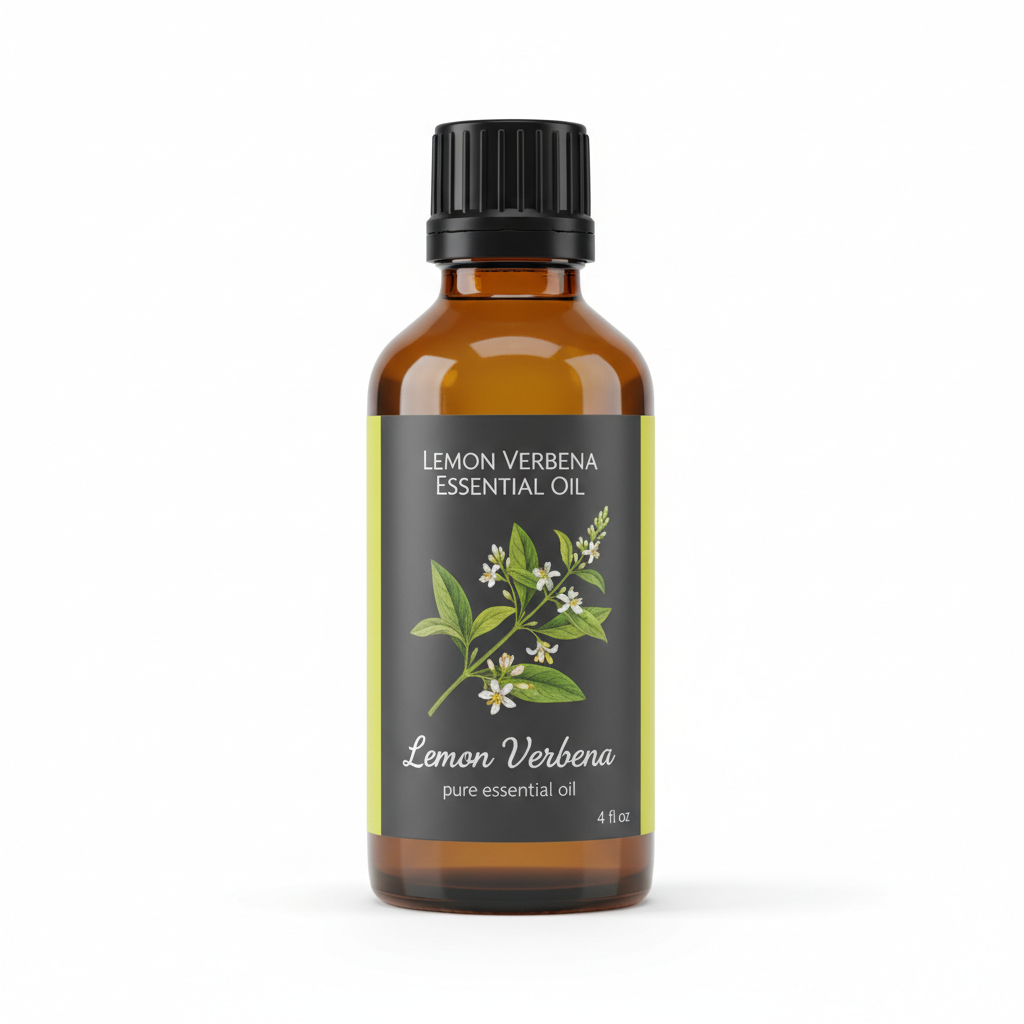
Lemon Verbena Essential Oil
Our own Lemon Verbena Essential Oil, in sizes from 0.5 oz to bulk.
From $10.99
Shop Now →Why Lemon Verbena Earns Its Shelf Space
Lemon verbena (Aloysia citrodora) is steam-distilled from the leaves of a woody shrub native to South America, though most commercial production now comes from France, Spain, and North Africa. The scent is citrusy but distinctly green and herbaceous, closer to crushed leaves than to lemon peel. That makes it a favorite for blenders who want a citrus note that reads as fresh and garden-like rather than sweet or candy-like. In soap, it plays well with verbena's traditional partners: lemongrass, petitgrain, and a touch of vetiver for depth. In candles, it tends to sit as a top note that needs a supporting middle, so most studios pair it rather than run it solo. None of that is a medical claim. It is simply why the oil sells, and why getting the sourcing right matters before you commit a full batch's worth of wax or oils to it.
What to Look For: Quality Indicators
Bulk buying strips away a lot of the reassurance you get from a pretty retail label. What is left is the paperwork and the sensory check. Here is what actually tells you something.
Botanical name and growing origin
The listing should say Aloysia citrodora (sometimes labeled Lippia citriodora, an older synonym) and name a country or region of origin. If a supplier cannot tell you where the plant material was grown, that is worth noting, not necessarily disqualifying, but worth a follow-up question. Origin also affects price: French and Spanish material tends to run at a premium over North African sourcing, though quality varies by harvest and distiller more than by country alone.
Extraction method and part of plant
Steam distillation from the leaf is standard for this oil. Some sellers offer a cheaper "lemon verbena fragrance oil," which is a synthetic blend, not a distilled essential oil. Fragrance oils have their place in candle making, particularly for scent throw consistency, but they are a different product with different labeling obligations. Know which one you are ordering, because the two are not interchangeable in a recipe built around an essential oil's chemistry.
Lab documentation (GC-MS reports)
A gas chromatography-mass spectrometry (GC-MS) report shows the actual chemical makeup of a specific batch. For lemon verbena, you would expect a profile dominated by citral (a mix of geranial and neral isomers), along with smaller amounts of limonene and other terpenes. A supplier who provides a batch-specific GC-MS report, not a generic spec sheet copied across every lot, is telling you they test what they sell. Ask for the report tied to the actual batch number on your invoice, not a sample report from the product page.
Color, viscosity, and aroma on arrival
Genuine lemon verbena oil is typically pale yellow to light amber and thin, watery in viscosity. It should smell sharply green and lemony, with a slightly herbal, almost hay-like undertone once it opens up. A batch that arrives thick, dark, or smelling flat and one-dimensional may have been cut, oxidized, or mislabeled. Trust your nose on the first sniff test of every new bulk shipment, even from a supplier you have used before. Batches vary, and so does shipping and storage handling before it reaches your dock.
Key Features to Compare Before You Buy
Once you have a shortlist of bulk essential oil suppliers for craft makers, line them up against a common set of features rather than comparing price alone. Price per ounce means very little if the batch is inconsistent from order to order.
| Feature | Why it matters for a working studio |
|---|---|
| Batch-specific GC-MS testing | Confirms chemical consistency between orders, which matters for repeatable soap and candle formulas |
| Bulk size tiers (4 oz, 1 lb, 5 lb, etc.) | Lets you scale a purchase to actual usage instead of over-buying and risking oxidation in storage |
| Price breaks at volume | Shows whether the supplier rewards repeat, larger orders, which matters once you move past sampling |
| Country of origin disclosure | Affects both scent character and your own product labeling accuracy |
| Amber glass or lined-metal packaging | Citrus oils are light-sensitive and degrade faster in clear glass or unlined plastic |
| Reorder consistency | Whether batch 1 and batch 6 smell and test the same, ask other buyers or request small samples across two separate orders before committing to a large one |
| Shipping and minimum order size | Some wholesale suppliers require a minimum order that only makes sense once you have production volume to match |
Top Picks at Different Price Points
Bulk lemon verbena pricing spans a wide range, and the right tier depends on your production volume and how sensitive your finished product is to scent variation. Below is a general guide to what you can expect at each level, since exact pricing shifts with harvest and season.
Budget tier: sampling and small-batch runs
At the entry level, expect smaller bottle sizes (1 to 4 ounces) sold at retail or near-retail pricing, often through general essential oil marketplaces rather than dedicated wholesale channels. This tier is the right place to test a new supplier's aroma and lab documentation before committing to anything larger. Do not skip this step even if a bulk price looks attractive; a small trial order is cheap insurance against a full case that does not match your expectations.
Mid-range: working studio volume
Most active soap and candle studios land here, buying in half-pound to five-pound increments from a supplier who publishes GC-MS reports and offers a modest volume discount. This tier typically balances per-unit cost against manageable minimum orders, and it is where you should expect responsive customer service if a batch smells off or a shipment is delayed. A supplier worth staying with at this tier will replace or credit a batch that fails your incoming quality check without an argument.
Premium and direct-from-distiller
At the top end, some studios buy directly from a distiller or a dedicated wholesale essential oil house, often in five-pound-plus or kilogram quantities, sometimes with a private-label or custom blending arrangement. This tier usually costs more per pound only if you are buying small; at true bulk volume, direct-from-distiller pricing frequently beats marked-up marketplace listings. The tradeoff is a longer relationship-building process and sometimes a minimum annual commitment.
A rule of thumb worth keeping in your back pocket: if a bulk lemon verbena listing is priced noticeably below every other wholesale essential oil supplier you can find for craft makers, ask why before you ask how fast it ships.
Red Flags to Avoid
A few warning signs come up again and again in bulk essential oil buying, and lemon verbena is no exception.
- No lab documentation offered, or only a generic PDF. If every product on a site links to the same GC-MS file regardless of batch number, that report tells you nothing about the bottle in front of you.
- Price far below the market range. Lemon verbena leaf yields a modest amount of oil per distillation run, which keeps the true cost above bargain-bin pricing. A price that looks too good usually means dilution, a synthetic substitute, or old stock being cleared out.
- Vague or missing botanical name. Listings that just say "verbena oil" without Aloysia citrodora may be selling a different plant, such as vervain (Verbena officinalis), which has a completely different aroma and chemistry.
- Clear glass or unlabeled plastic bulk containers. Reputable wholesale essential oil suppliers ship citrus and light-sensitive oils in amber glass or properly lined containers, not clear jugs sitting on a loading dock in daylight.
- No return or credit policy for failed batches. Ask directly what happens if a batch fails your incoming smell test or a lab check you run yourself. A supplier who cannot answer that question plainly is not set up for wholesale relationships.
- Inconsistent batch numbers or missing harvest dates. Traceability back to a specific distillation run is part of what you are paying for at wholesale volume.
Where to Buy Bulk Lemon Verbena Oil
There are a handful of practical channels for sourcing lemon verbena at scale, each with different tradeoffs.
Dedicated wholesale essential oil suppliers
Companies built specifically around wholesale essential oil for soap, candle, and cosmetic makers are usually the most straightforward path. They tend to publish tiered pricing, batch-specific documentation, and minimum order quantities up front, which makes comparison shopping easier. Look for one that lists lemon verbena among a broader catalog of citrus and herbal oils, since that usually signals steady turnover rather than a single slow-moving product.
Direct-from-distiller relationships
For studios buying in the largest volumes, going directly to a distillery, often through a regional cooperative or agricultural export contact, can cut out a layer of markup. This path takes more legwork and usually more patience with lead times, since you are working closer to harvest schedules.
Cooperative or group buying
Some independent soap and candle makers pool orders with a few other small studios to hit a wholesale minimum they could not reach alone. If you belong to a local maker's guild or an online community of small-batch producers, this is worth raising as an option, particularly for a specialty oil like lemon verbena that not every supplier stocks in large volume.
General marketplaces
Larger online marketplaces carry bulk essential oils from many different sellers under one roof, which makes comparison shopping fast but also means quality varies enormously from listing to listing. Treat every new marketplace seller as unproven until a trial order and your own sniff test and, ideally, a lab report say otherwise.
A Note on Working With Lemon Verbena in the Studio
Once a bulk order arrives, a few practical habits protect both your product and your customers. Always dilute essential oils properly before skin contact, whether you are testing a soap formula on your own hands or handing out samples. A patch test on a small area of skin, waiting a full day before wider use, is standard practice for anyone introducing a new oil into a personal care line. Citrus and citrus-adjacent oils like lemon verbena can increase skin sensitivity to sunlight for some people, so if you are formulating a leave-on product, that is worth noting on your packaging and worth researching further for your specific application. This guide covers sourcing and quality, not formulation safety data, so cross-check usage rates and any contraindications against current cosmetic safety references and, where a customer has a specific health question, point them to a qualified healthcare provider rather than answering it yourself.
For candle work, keep in mind that lemon verbena's lighter molecular weight compounds can burn off faster than heavier base notes, which is part of why most candle makers pair it with something that anchors the scent through a full burn. Store bulk stock in a cool, dark space regardless of end use; citrus-forward oils are among the faster oils to oxidize once opened, and a five-pound container you cracked open in January should not still be sitting half-full and exposed to light in July.
Bringing It Together
Buying lemon verbena oil in bulk rewards a little patience up front. Start with a small trial order from any new supplier, check the botanical name and batch-specific lab report, smell it against a known good sample if you have one, and only then scale up to the volume your production actually needs. The studios that get burned on bulk purchases are almost always the ones that skipped the trial step because a price looked good or a lead time was tight. The ones that build a reliable supply chain are the ones that treat every new bulk shipment, even from a trusted source, as worth a fresh check before it goes anywhere near a batch.